Veteran-Owned | 25+ Years | 185+ Five-Star Reviews
What Is Grout Haze and Why Is It a Problem in Miami
If your tile looks cloudy, chalky, streaky, or dull after a recent installation, the problem is probably grout haze. It is one of the most common post-construction tile complaints in South Florida, and it is also one of the most mishandled — because it looks like a cleaning problem, but it is not.

What Grout Haze Actually Is

During tile installation, grout is pressed into the joints between tiles and the excess is wiped off the surface. If the cleanup is not done thoroughly while the grout is still wet — or if the grout is allowed to dry on the tile before final cleanup — a thin film of grout residue bonds to the tile surface. That film is grout haze.
It is not embedded in the grout lines. It sits on top of the tile itself. That distinction matters because the removal process is completely different from grout line cleaning.
Grout haze can appear as a white or gray powder, a cloudy film, streaks, or a general dullness across the tile surface. On polished porcelain or large-format tile, it is especially visible because any reduction in surface reflectivity is noticeable. On textured or matte tile, it can be harder to see but is still present.
Why Grout Haze Is More Stubborn in South Florida
Miami's humidity changes how grout haze behaves. In a dry climate, grout residue dries as a relatively loose powder that is easier to remove soon after installation. In South Florida's humidity, the moisture in the air slows the drying process and allows the residue to partially rehydrate and re-bond to the tile surface multiple times before it fully cures. The result is a film that is bonded more tightly than it would be elsewhere.
Construction timelines make this worse. Fast-paced renovation and new construction projects frequently move to the next phase before the tile cleanup is fully complete. By the time the homeowner or property manager sees the floor under normal lighting, the haze has already cured.
Hard water compounds the problem further. When tap water is used during installation cleanup and allowed to dry on the tile, it leaves its own mineral film on top of the grout residue. What looks like a simple haze issue is sometimes two separate layers — grout residue and mineral deposits — that need to be addressed differently.
What Does Not Work
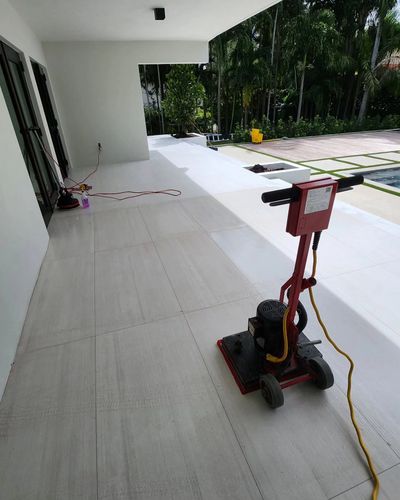
Regular mopping spreads the residue rather than removing it. Vinegar and citrus-based cleaners can etch natural stone and weaken grout joints, and they rarely dissolve cured grout haze effectively. Scrubbing harder with abrasive pads can scratch polished tile surfaces. Pressure washing forces water into grout lines and can damage adjacent surfaces — and it does not remove bonded residue from the tile face.
Most DIY attempts either fail to improve the surface or make it harder to correct properly afterward.
What the Correct Removal Process Looks Like
Effective grout haze removal starts with identifying what type of haze is present, what the tile surface is, and how long the haze has been there. The process is different for cement-based haze versus epoxy haze. It is different for polished porcelain versus textured ceramic versus natural stone. Using the wrong chemistry on the wrong surface causes damage that is more expensive to fix than the original haze.
For cement-based haze on porcelain or ceramic tile, a diluted acidic solution is typically used — carefully controlled so it dissolves the grout residue without affecting the grout lines or tile glaze. Natural stone requires a different approach because acid will etch the surface. Epoxy haze, which bonds more aggressively, requires specialized solvents and often more labor.
After the haze is removed, the surface is rinsed and neutralized. Grout sealing is typically recommended at this stage to protect the now-clean grout lines going forward.
When to Call a Professional for Grout Haze
If the haze is recent and mild, some homeowners can address it with a correctly matched haze remover purchased from a tile supplier — not a hardware store general cleaner. The key is identifying the tile type correctly before applying anything.
If the haze has been present for more than a few weeks, if previous cleaning attempts have already been made, if the tile is natural stone, or if the haze appears to have multiple layers, professional correction is the right call. At that point the risk of causing additional surface damage with the wrong DIY approach outweighs the cost of having it done correctly.
Keep It Clean handles grout haze removal across Miami-Dade and Monroe County, including post-construction cleanup for condos, new homes, and renovation projects.
See Keep It Clean's grout haze removal service →